A tartalomból:
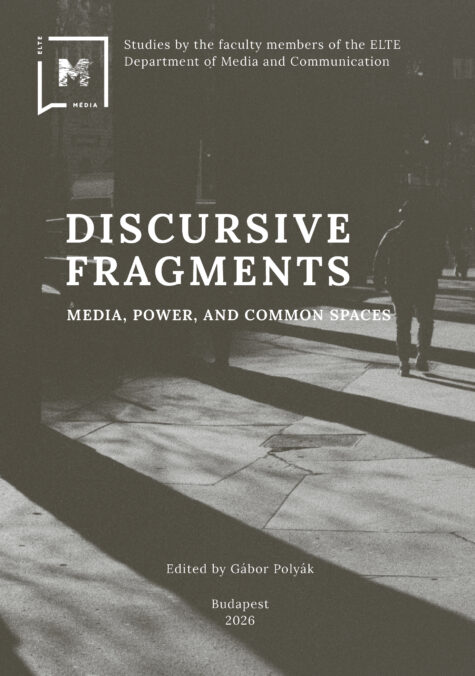
A department is not merely an “organisational unit” of teachers who teach in the same degree programmes. It is not merely a collection of shared offices. Fortunately, it is not just an endless tream of administrative tasks. A department is a professional community. This is true, even or especially, when the departments of the faculties of humanities are much more diverse than those in other fields of science, in terms of qualifications, research areas, and networks of colleagues. The Department of Media and Communication at the Institute of Art Theory and Media Research, Faculty of Humanities, Eötvös Loránd University, is one such diverse community. It is a cavalcade of literary scholars, linguists, philosophers, aestheticians, sociologists, lawyers, and communication experts. But we are all passionately committed to understanding the phenomena of human communication and social discourse. And what we understand, we write about, talk about, and teach about. The Department of Media and Communication at ELTE is an island of freedom of thought and speech, of criticism and acceptance. It is a safe space, not because difficult topics and heated debates are excluded, but precisely because there is room for them here. No one feels that they cannot speak up, that their opinion is worth less than that of others, but neither do they feel that they can hide behind clichés in a debate. The department has an enormous responsibility in indirectly shaping the public sphere in the coming years and decades. Our students have a good chance of becoming key players in the journalism and communications industries.
Letöltés
Tipp
Az ingyenes feliratkozás menüpontban pár kattintással beállíthatod, hogy az egyes kiadványokhoz, sorozatokhoz tartozó új megjelenésekkor e-mailen automatikusan értesítést kapj.